Is the work we do meaningless?

So often in life, we get caught up in negativity, leaving us angry, emotional, and isolated from friends and family. God does not want us to hate each other, but to love each other, to find the good in others, and to support them just as He does for each of us. So how do we do we focus on the positives when we cannot put the past behind?

Lord knows I am no expert on this matter, but I can say this: once I started trusting God, letting Him back into my heart and laying my struggles before Him, things changed. I saw those around me differently, and I was becoming more empathetic toward others.

Over the years, I focused on so many negative events in my life that I went from having a cheerful, positive, can-do attitude, where I helped so many that were struggling to having a negative, “why are you only focusing on my disability attitude,” that I was finding interactions with others hard. Others annoyed me by trying to help me, when in reality, I could do things myself, or so I thought. I found people overbearing.

Over the past few years, I have asked myself what changed. I was the same person, wasn’t I? The simple answer was no.

Sure, I had events happen in life that I would rather forget, and I now have a disability that limits what I can do and where I can go. So much seems wrong. It frustrates and depresses me. The life I knew changed drastically and sadly through it all, I forgot my blessings. The gifts God has given me have helped me cope with the isolation, hurt, sadness, and the disability. I learned how to harness these gifts to help myself and countless others, but differently than I planned.

After years of struggles and deep soul searching, I realize now that everything that happened in my past, good and bad, must stay in the past, but never forget God put those experiences and people in my life for a reason. Even the disability happened for a reason. I cannot say I understand why, but God does. He has other plans for me.

Earlier this year, I reached out to a pastor and opened up to him about my struggles. I told him of the horrible things I have seen, of dealing with a disability, of losing my brother, of family turmoil with my surviving brothers and late father. I told him I am losing friends over politics, that I am anxious about the current state of the world and our upcoming election. I asked him to help me understand. I only knew of this pastor through a friend, yet there was something that made me feel comfortable talking to him, especially when he said many were questioning some of the same concerns. Suddenly, I did not feel so alone in my feelings.

We spoke about many things, and he often referenced God and the Bible, but in a way that it piqued my interest to understand and ask more questions. He did not push me aside because I was not a member of his congregation, but helped me understand that what I was going through was “normal”, that humanity is flawed and that we have someone in our lives who will forgive us and guide us as long as we will let Him in our hearts, follow, obey, and trust Him. Our conversation lasted a few days and sporadically over several months.

Since our conversation was through the computer, I kept our conversation so I could return to it. After re-reading, I noticed I told him all the negative things that happened, how people were focusing solely on my disability and not valuing what I could still contribute. There was not one positive experience I had relayed to him. WOW! What a revelation!

I needed to change that. Are people perceiving me as negative all the time? I am really not that negative. I see positives in many people and events. I just could not see these in myself. Why should this pastor try to help me when I was being so negative? I was not showing him I was a believer, even though I insisted I believed in Christ.

I wondered if I merely convinced myself, based on all the “past good deeds” I performed, that I was still a good person. A Christian.

I had distanced myself from church years ago. I was not one for “organized religion.” I saw some not so good sides if it and it did not sit well. People indulged in everything possible during the week: drinking, gambling, sex, lying, cheating, and stealing, but professed they were Christian because they attended church on Sundays. It was offensive, to say the least, but I was starting down a slippery slope myself, trying to “fit in” with friends. If things did not change, I would end up like those that I found offensive. I needed someone I could trust. I needed God’s help.

After conversing with Pastor Chris and his Congregational Pastor, I read scripture and Bible plans alone and with a friend. I read my friends’ comments as she interpreted the scriptures as they pertained to her life. She is open, and like the pastor, her comments make me reflect on my own situations.

When I felt comfortable, I attended the pastor’s church. The attendance was larger than expected. The congregation welcomed me despite me being on a rollater. It was like they did not see it. I did not get the “condescending stares or tones of speech” that usually occur when I enter a room. It was something that over the years has made me self-conscious. Often, people talk down to me as if my disability affects my intelligence. It is infuriating, but I have tried to smile and pretend it does not bother me.

Seeing the joy on the congregation’s faces as they interacted with each other and watching the children’s excitement as they rushed to attend the children’s services was refreshing. I realized then that there was something special within these walls; something my love for nature did not have: a community.

I finally met the pastor, his wife, congregational and youth pastors during a meet and greet for those new to the church. Having had little interaction with people the past several years, I found myself a little reserved, which surprised me because in my younger years, I was extremely outgoing. The pastor and his wife were kind enough to give me a ride home and once again, I talked about negative things. WHAT WAS THE MATTER WITH ME? Wasn’t there anything positive in my life I could share?

That evening, I tried to focus on the positives, but I just could not seem to recall the good. I knew there were many positive events in my life, so why could I not recall them? I prayed to God to help me see the positivity in my life. It took a few days, but I awoke from a sleep that Tuesday recalling incidents that, honestly, I never thought twice about. They were not significant to me because they were just part of my job; however, these blessings, no matter how small or how disguised, were from Him.

Reverend Dave said in God is Not Dead, “Some of the most important work we do seems meaningless.”

So, what were the positives? I am married to the same man for 33-1/2 years, I have delivered two babies as an EMT, trained hundreds of people in emergency response and safety, helped countless people during emergencies, helped heal communities and widows during their time of loss and shared people’s personal victories through my writing. I have started two social media sites that have brought thousands of people together: one to celebrate emergency responders and another for those with gait injuries to discuss a new breakthrough device, to share victories and encourage others. And I’ve been a friend to many when they needed someone to listen to them.

I suppose I looked upon my acts of kindness and willingness to help others simply as part of life and something we all must do to help each other on earth. It was nothing special, but they were immeasurable in God’s eye.

As an EMT and law enforcement officer, I saw heartache, death, and hope. I was thankful for having “discretion” with my decisions. Why? I believed then, and still do today, that people are inherently good. People make mistakes, but punishing them is not always the answer. Pointing out their mistakes and offering ways to correct it goes much further than fines or imprisonment.

God put fantastic doctors in my life and gave my husband the strength to help me when a medical diagnosis threw me for a loop. They were with me throughout the treatments. One specialist, 30-years ago, said I’d be paralyzed in a year. Through the grace of God, that did not happen.

Had I genuinely believed in Christ over the year, I would have realized that the disability was just another leg of my journey. Corinthians 5:17 NIV told me what to do when my life changed.

“Therefore, if anyone is in Christ, he is a new creation; old things have passed away; behold all things have become new.”

My old life is gone. It is never easy to change, but often it is necessary. It was what I needed to do, and I did with God’s help.

I thank God every day for walking beside me. He has given me the strength to face each day, to regroup and continue to live my life just differently than I had planned. God has given me the gift of pursuing the truth and standing up for my beliefs despite what others say. He has given me the gift of compassion and forgiveness, though forgiveness is not always easy.

He has given me the gift of sharing my knowledge with others through teaching. He has gifted me understanding that everyone has a story to tell and has given me the ability to share their stories with others. This gift has helped heal a community after the tragic loss of a fallen officer, healed the wives of good friends whose husbands have died, one by suicide. It has enabled me to bring a family together, to understand why their father/husband never spoke of his job and it brought sheer happiness to him in his last months for his family to know his work helped save the world. I will never forget the pride I saw in this family or the comfort I brought to others with my stories.

Though the gift of expression helped so many through troubled times, I admit, many of the stories I wrote, though they uplifted others, took its toll on me more than I realized because I kept reliving the events in my mind

I needed to change the way I thought, the way I spoke and the way I acted. Could it be that it was me who focused on my disability and not others? Were my perceptions of others taking over my life? I believe so, but God has been patient with me while I have been finding this out. Not everyone is cruel. I still believe people are inherently good but that our experiences shape up.

Philippians 4.8 NIV instructs us: “Finally, brothers and sisters, whatever is true, whatever is noble, whatever is right, whatever is pure, whatever is lovely, whatever is admirable-if anything is excellent or praiseworthy-think about such things.”

After my soul searching for the positive things in my life, I have to say, I am thankful that my life took the path as it did, though I wish it would have skipped the disability. I may not have a fancy house or cars. I do not travel to exotic places or wear expensive clothes and jewelry. Even my dogs are “used.” I do not have a movie star husband nor was I raised by wealthy parents. What I have is a hardworking, loving, and loyal husband, a solid foundation growing up in a two-parent household where I wanted for nothing, had a good education, have always been employed, have a can-do attitude, and am surrounded by great friends. Best of all, I have God walking beside me. I would say there are many, many positives in my life…I just need to focus on them more than the negative.

I cannot have a positive life if I have a negative mind.

“God is good all the time. And all the time, God is good.”

I thought you forgot me, God.

It’s me. The little girl who believed in you so much as a child that when my conscious bothered me or my stomach became unsettled, I was convinced it was the Holy Spirit telling me to rethink the decision I was about to make and kept me on track.

I’m the same little girl whose parents dumped me at my Grandmothers Friday and Saturday nights against my will. She made me attend Sunday School every week and made me sit next to her in the pew in church afterward. She knew everyone at the church. It was her community of friends. Her friends became my friends even though two generations separated us. Though she had a tight community, it was God she reached to while she battled cancer, it was me who took her to the hospital when the pain became too much to bear, and it was me, not my brothers, who struggled when she passed. I admit now my Grandmom was a tremendous influence in my life.

My parents were not deeply religious. Dad was Methodist and Mom was of the Christian Science faith. They attended church for an abbreviated period of time when my brothers and I were younger, but then stopped when we moved to our new home. My brothers and I drifted away from the church and sadly, none of us returned for quite a while. I believe my brother had shortly before he passed away. We claimed work got in our way of attending. We convinced ourselves that we were Christians because “we helped others in their time of need” whether on the ambulance or the police department, but church and everything it had to offer us faded away.

My question: How could there be a God when I was seeing the worst of life: death, assaults, pedophilia, prostitution, injury, disease, lies, deceit, greed, hate and envy in my community?

Mom worshipped silently as Dad was outwardly against the views and ways of Christian Science. I tried to understand her denomination as I grew older and questioned why her parents chose to raise her under that denomination when her parents were Lutheran and Catholic. Christian Science just didn’t sit well with me. It was one of the few things Dad and I agreed on.

Dad could recite scripture but his interactions with people were not always “Christian-like.”  My Dad was a genius and part of Mensa, so he was always right even when proven wrong. This led to numerous arguments and long-lasting feuds between neighbors, friends and even family. He taught his children to always do their research before challenging someone. I took his advice and when we got into an argument, it often did not end up well. Our relationship became very combative. Neither of us relented from our position. Every holiday when the family gathered, it ended up in shouting matches between Dad and one of his children, usually me. Mom ended up in tears. I realized Dad liked an audience and his anger usually only erupted when the family was together. He had to show everyone how intelligent he was, even though the areas of knowledge were limited.

I hated seeing Mom cry and I hated arguing with Dad. To keep conversations civil, I would arrive before everyone else or visit the day before the family came together. I missed years of holidays, but my sanity was intact. After a health diagnosis, my sanity and a calmer lifestyle were imperative to maintaining my health. Because I worked swing shift, it was easy for me to justify forgoing the gatherings simply by saying I had to work. If I wasn’t working, I would choose to cover a shift at the ambulance so other people with children could enjoy their holidays. My brother Kyle did the same. Sadly, it wasn’t until I was married that I started enjoying the holidays again…but this time with my husband’s family.

Unlike Grandmom, Mom and Dad were not fans of Lawrence Welk, gospel music, talking about Christ, or attending church. I don’t recall them making me pray before meals and bedtime, whereas when I was with my Grandmom, she made sure I prayed and thanked God for what life had given me. As time passed, I embraced those evenings with my grandmother and enjoyed being a part of her life. I was no longer unwilling to be with her. I looked forward to the wholesomeness in the messaging of her tv shows, music and scriptures. I looked forward to her newspaper, The Grit, because the stories were positive without being preachy. I found as I got older, I often incorporated the wholesomeness of The Grit when I wrote and yearned for those nights we spent together.

Much has changed over the years. People I loved have passed on with some strained relationships never mended. Volunteer and work experiences exposed me to sights and sounds which I wish I could forget but I cannot unsee or unhear the constant reminder of evil and death that haunts my memories. They laid dormant for years but after highly stressful situations, these images and sounds have re-surfaced. The uneasiness has caused a restlessness in me that I have struggled with for years.

My happiest times were when I was younger, when I had a “community” that understood and helped me through the tough times. I had a place to turn to and my “conscious” guided my decisions. It was a time when I believed in something higher. I believed in right and wrong. Today, the line between right and wrong is still there but gets clouded by manipulated messaging.

Technology perverts us. I think of technology as the “Frankenstein monster” of our times. We have created machines and applications with vast capabilities to bring knowledge and innovations to the world, but mankind also has a superiority complex which makes him ignorant and callous toward others. It makes many act as if they are God and that only they know what is best for mankind. They do not want challenges to their beliefs and have learned to manipulate data to meet their agenda. Mankind has not and probably never will be able to harness this unending wealth of knowledge without doing harm. Having unlimited knowledge leads to absolute power and diminished morals. Lord Acton coined a phrase in 1857 which is apparent in today’s word: “Absolute power corrupts absolutely.”

I crave truth and happiness. I crave finding the truth the traditional way without manipulation and without artificial intelligence. I crave talking to people who have civil conversations, and if disagreements arise, they are willing to defend their stance with well thought-out intelligent responses and keep their mind open to my views and reasoning.

Over the past few years, I have reached out to pastors and ministers. I have reached out to friends that live through the word of God. On May 15 of this year, I reached out to my friend, Tina’s pastor, and have started a journey to get closer to God. Pastor Chris and I have had numerous conversations. I’m asking a lot of questions, and I am listening to his guidance and sermons as well as reading his blogs. Tina introduced me to Bible plans which we sometimes read together. Pastor Chris’ Congregational Life Pastor introduced me to the technology the church uses to help me gain a better understanding of God through MyVersion, Right Now Media and church bulletins.

Since May, it seems every time I turn around, the Holy Spirit is speaking to me through the shows I watch on television, the movies I’m choosing to watch, the posts I see on Facebook, and the conversations I’m having with people, including my husband. MyVersion and the scriptures I am reading in the Bible are in sync with what I am feeling and struggling with at that moment. It’s almost as if the scriptures are geared specifically for me in that moment. I wanted truth and I am finding it. I have broached the conversation of faith with a few friends which I never did before, and I feel good about the reception I am receiving.
In Proverbs 30:5 ESV, it states “Every word of God proves true; he is a shield to those who take refuge in him.”  

Life has been better since May since I started to open my heart to let Jesus in. I am finding refuge in His word. I left a toxic work environment that was tearing me down. I walked away from toxic friends. I am setting time aside every day to be with God through scripture and thought. Though I’m limited in mobility to be as independent as I’d like, to attend services or help others, I’m working my way through this as well; asking God to walk by my side as I navigate my new normal. I am finding faith-based movies as wholesome as The Grit when I was a child. Quotes from movies like God is Not Dead are resonating with me at the right time in my life.

“You’re here because that still small voice inside you isn’t happy with the choices everyone else wants you to make. Personally, I think it’s the Holy Spirit talking to you. That’s how He interacts with us if we allow him to. All you have to do is decide whether or not you’re willing to listen. It’s not easy, but it’s simple.”-Reverand Dave.

I’m listening to that small voice within me and thanking God every day for the bounties and the people He has made a part of my life. My life has had its challenges, but God has walked with me through the darkness and led me to the light on the other side. I know now that I opened my heart to Jesus, I am on a journey with Him. He will always be the one constant force in my life I can depend on and that I can trust His guidance today and always to show me the way.

“God is good all the time. And all the time, God is good.”Reverand Dave from God is NOT Dead

Insomnia

Most people lie in bed until they fall asleep. Not me. I inherited insomnia from my father. Whenever I have something on my mind, I go to the living room around 1 am, snuggle up in the recliner with a fleece blanket and think about what is bothering me for 2-3 hours. Usually, it involves work: an unfinished contract, licenses that are due, insurance issues, or other miscellaneous concerns.

I really should request overtime pay!

Other times, I worry about what is going on in this chaotic world and start asking myself if I am prepared for retirement or affording and maintaining health benefits. One of my biggest concerns is staying in my home if my condition worsens.

Over the last year, I have tried to escape these sleepless nights. I have changed my diet and beverage intake, thinking it may be something I ate or drank. I have increased my exercising during the day and have even wondered if it was a side effect of medication. Whatever the cause, I have simply accepted that insomnia will always be a part of my life and have learned to cope with it.

I have had more adventures in the early morning hours than most people have in a lifetime. I have wandered into the woods and rivers of the Upper Michigan Peninsula’s Big-Two-Hearted River with Ernest Hemingway and Nick Adams, and I have fished for salmon on The Vermont River with W.D. Wetherell.

Like Ships that Pass in the Night, I visited residents of a late 1800s Switzerland tuberculosis sanitarium with Beatrice Harraden. I felt the residents emotions as they dealt with love, loss, and bitterness while facing their own mortality. I joined Steven Higgs on his Culinary Capers as he told of a culinary tour of the British Isles that led two attendees, retired Chief Superintendent Albert Smith and his ex-police dog, Rex, on a trail of murder, theft, and drugs.

I followed the journey between young Teddy Roosevelt and Booker T. Washington in Teddy & Booker T. as the New York politician and the freed slave worked on bringing racial equality to the United States after the Civil War.

I followed the escapades of Arthur, The Brown Dog Under the Bed, as he struggled to survive on the streets, homeless, after his owner died. Arthur sneaks into a home, hiding from the family for fear he will be back on the streets but hoping they accept him as theirs. I was living Arthur’s life with him. It made me sad, happy, and hopeful throughout the three-book series, but it also made me think of my own 5-year-old rescue, Sully, who like Arthur, was looking for his forever home.

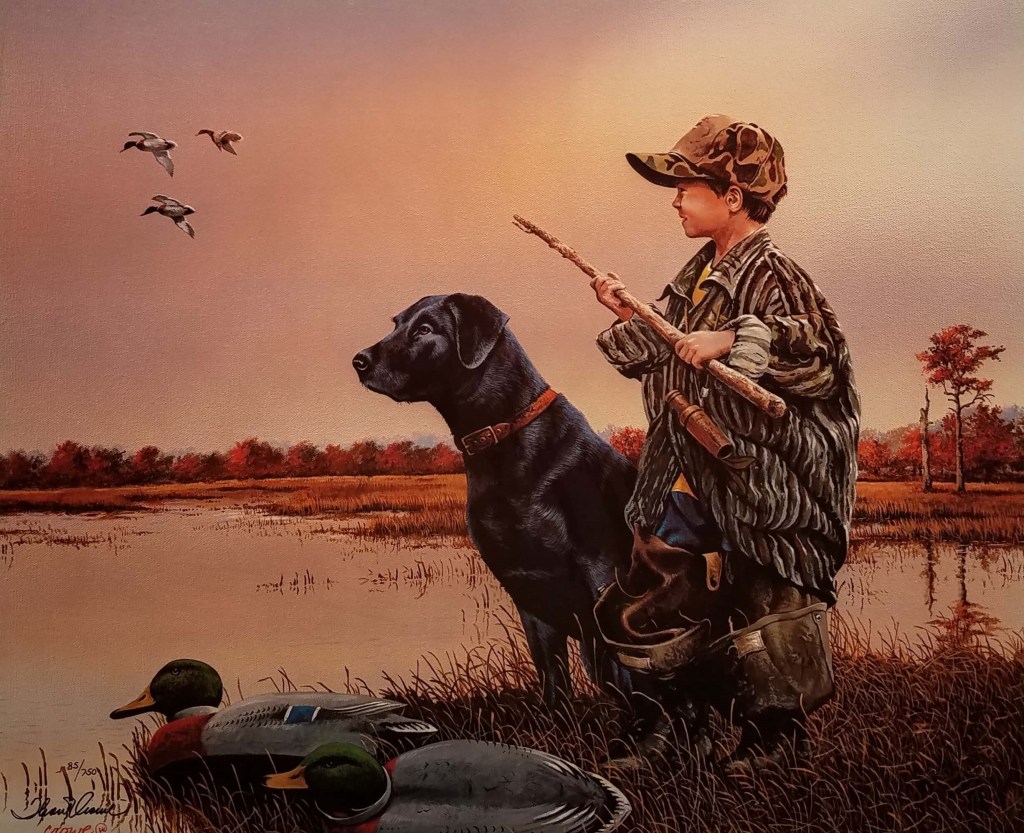
I have escaped into the woods, rivers, tree stands, and duck blinds of Northern Wisconsin with Gordon MacQuarrie and the President of the Old Duck Hunters Association, Inc. In Stories of the Old Duck Hunters and Other Drivel, the President would dress in his beat-up brown mackinaw, light his pipe and proceed to set out his hundred-year-old decoys. Though the excitement was energizing, age caught up to him and he often fell asleep. The President’s cantankerous spirit and the practical jokes were a reflection of the boyhood charm he still possessed.

MacQuarrie told of the “Armistice Day Storm” when hundreds of duck hunters set out on a balmy, 55-degree day only to freeze to death when Mother Nature descended with a flash freeze, 5-foot waves and a rapidly dropping temperature to negative 10 degrees all within an hour’s time. Ducks and geese froze mid-flight and fell to the ground. Hundreds of duck hunters did not make it home that evening. Others sustained frostbite and only survived by taking shelter under boats on land and embracing each other for warmth.

*Captivated by the story, I researched the event the following day. Some areas along the Midwestern panhandle started the day at 65-degrees. The same storm hit Michigan, Wisconsin, Iowa, Nebraska, South Dakota, and Minnesota. Temperatures quickly dropped to negative 55 degrees with 16-27 inches of snow.

However, one of the most relaxing journeys I have taken between 1 and 4 in the morning has to be the many stories of Gene Hill. Hill published several books based on his column “Hill County” in Field & Stream magazine, but it was his recollections of “Hill Country” that drew me in. There is no critical thinking, having to follow characters, thinking about plots, or trying to figure out who done it. It was simply great writing. I found myself sitting back and relaxing, picturing the places, people, and dogs. It is like sitting next to a favorite family member or friend and listening intently as they tell their stories, whether or not exaggerated. Even non-hunters like me cannot help but to be captivated by his yarns.

Each one of Hill’s friends has a favorite spot, a favorite gun and even a favorite dog. Some boast of being the best shot with the best gun while others, like Hill, boast about how he can sneak in new hunting clothes, guns, and even dogs past his wife in time for the next hunting season. I could try to explain my fascination, but it is best left, as Gene Hill described it.

“Hill Country is neither here nor there. It’s the place just over the next rise, that soft pool around the next bend of the stream. Or the cover you always planned to hunt but somehow never did.

It’s the hollow that owls call from in the dead of winter; the thicket that a whitetail always disappears into before you’ve gotten quite unwound. It’s the circle where the big trout was rising before the little one took your fly. It’s the cover that’s full of birds but too thick to shoot. Or where your best bird dog chooses to exhibit his worst behavior.

Hill Country is littered with flies in the trees, three empty shells and no feathers, lost dog whistles and forgotten pocketknives. It’s the place where, if you find enough old tobacco in the pocket of your hunting coat to fill your pipe, you don’t have any dry matches, or, just as bad, vice versa.

It’s the place where the best places to cast from are always two inches deeper than your waders can handle, where the sun is always in your eyes on the easy straightaway shots, and whoever you take there fishing or gunning always has his best day while you have one, you’d rather forget, but nobody lets you.

If we want an old dog to come back for an hour or so from wherever old dogs live forever, all we have to do is ask.

We can be 11 again and fishing with untarnished wonder…

Hill Country is the place we’ve never been or the place we always wanted to go back to. It can be a day we never forget or a day we’ve always dreamed would come to pass.

We can walk in the rain, sit in the sun, or huddle around the fire…whatever seems to be just right at the time. And we’ll talk about the secret things that keep us coming back: the woods we hear when the loons cry; the things we feel when the old dog falls asleep with her head laid lovingly across our knee.

All we need in Hill Country is a few good friends to keep us company on our wanderings.”

As I recline back immersed in his memories of “Hill Country and wrapped in a warm fleece blanket, I sip my tea and glance round my room. Gene Hill takes me away to the wilds of Missouri, Arkansas, Wisconsin, Michigan, New Jersey, and Maryland’s Eastern Shore. No wonder the stories of “Hill Country” relax me. I have apparently liked and found comfort in the stories of ducks, upland game hunting, dogs, and the great outdoors for quite some time. My home reveals this obvious interest in every room.

My bookshelves hold stories from Hemingway, Wetherell, MacQuarrie, Hill, Michener. and others. Three specific books reveal a treasure of some of the greatest outdoor writing of the 20th century.  The Best of Field & Stream, A Treasury of Outdoor Life and Autumn Passages: A Ducks Unlimited Treasury of Waterfowling Classics.

My house displays an array of hand-carved and professionally carved decoys, numerous prints, sculptures, and Bradford Exchange collectable plates of hunting dogs, duck hunting and upland game prints, throws, and pillows,

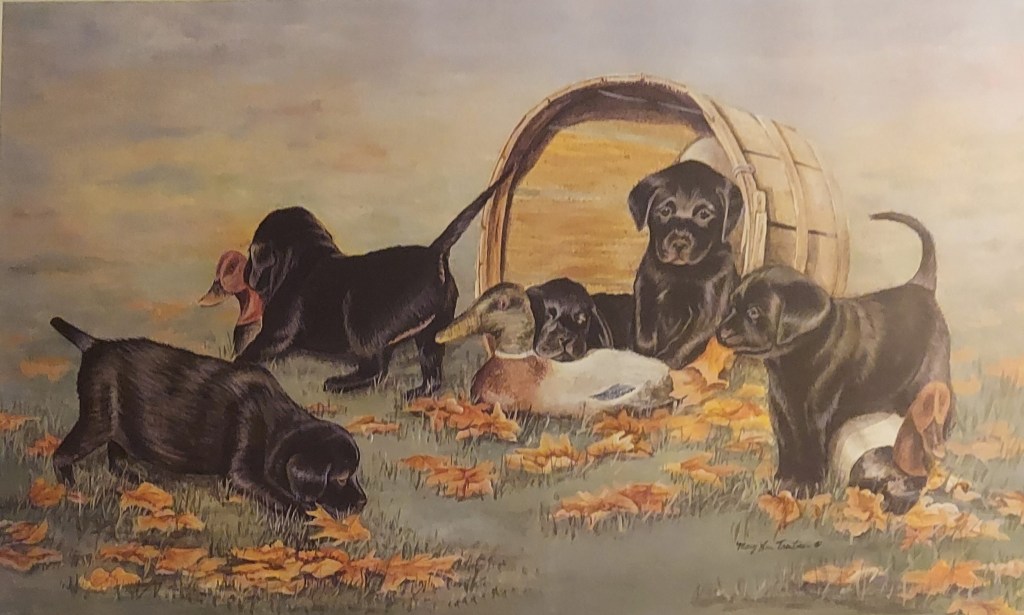
My love for ducks and duck hunting truly surfaced on one of our many trips to the Havre de Grace (MD) Annual Decoy & Wildlife Arts Festival. A framed print we purchased on one of our many trips of lab puppies and decoys titled Slumber Party by Maryland artist, Mary Lou Troutman, beautifies the hallway wall.

The Havre de Grace Decoy Museum is another one of our favorite stops. The exhibit showcases the rich history of duck hunting from the early 1800s to the present day. Life size animatronics brings the world of the decoy carver to life. Though very interesting, it also highlights the near extinction of a variety of species because of the use of skiff boats and punt guns that were pre-conservation laws and societies like Ducks Unlimited.

Our trips to Havre de Grace and Northeast, MD inspired me, when I was sick and recovering, to read The Watermen by James Michener. The Watermen was one chapter from Chesapeake, but it was also a stand-alone book. (I finally read all 865 pages of Michener’s, Chesapeake, a few years ago, and it did not let me down.)

After looking over my interior decorations, my choice in books, and knowing what relaxes me when I am stressed, I have realized that in my previous life; I must have been a retriever. This would explain the excitement that stops me in my tracks when I see geese flying in their V-shape formation against the greying clouds of fall. It signals cooler weather and shorter days. It is why I get sidetracked when I see them landing in the fields by the hundreds and why I get a sudden burst of energy every time I approach a large body of water. If there are ducks on the water, I have to get a closer look, like a lab, and be there with them in the moment. My husband says I wiggle with excitement.

I find cattails and marshy areas beautiful, serene, and yet a bit mysterious while others say it makes them feel uneasy and cold; not knowing what is there. I can understand the eagerness of the labs as they sense the changing of the seasons. I also have an eagerness as I look forward to the seasons transformations.

Like a working retriever, I look forward to the warmth of the fireplace as it quickly replaces the dampness and cold of late fall and winter and makes my achy joints less painful. The crackling sound of the logs is relaxing music to my ears. Combine this with sitting in a comfortable chair with a fleece blanket wrapped around me while paging through an enjoyable book is sheer tranquility. I have seen that same peace with wet, tired labs after a hunt, as they curl up on a cushy bed or rug in front of a fireplace; steam coming up from their exhausted body, their legs start moving, small sounds are emitted from their mouth, deep breaths and sighs are made and from time to time, their tail wags.

A sip of brandy, scotch, or tea is always welcome as I relax. Though I do not smoke, I would not mind someone sitting next to me smoking a pipe of Captain Black tobacco and reading a good book alongside me. The aroma takes me back to my childhood when my father was more easy-going and enjoyed time with his family.

I relish in the yarns of the many talented writers that I travel with early in the morning because they talk of a simpler time; one they cherished with family, friends, and magnificent dogs. Along the many roads I have traveled, I experienced the joy and sadness of a world that is foreign to me, yet somehow, their stories also draw me in as if I am there.

Many young boys no longer follow in their father’s footsteps of duck hunting as cell phones and social media sites have captured their full attention. Some parents possess dogs as mere objects to entertain children, while some treat the dog as family. As for dogs being exposed to the world of duck hunting and retrieving, well I am afraid that is on its way out for sport.

Though some landowners allow select hunters to use their grounds and some states set aside game lands, the hidden get-aways that hunters searched for have nearly disappeared. Today, many hidden duck hunting locations are off limits; replaced by professional plantations with guided shoots. These professional venues have no personal touches or pictorial memories that tell the stories handed down from generation to generation. The pictures that hung at the camp are now fading away. Jackets, boots, and decoy bags that held cherished memories deteriorate like life itself.

Duck calls and abandoned boats are found hidden buried among the vegetation; shotguns are sold despite the monetary value they still hold. Today’s generation is persuaded by politicians and activist groups that all guns are bad. The people using guns during the early days did so, not only for sport, but to supply commercial markets with food and the fashion industry with feathers. Some lived off the land and for them, guns and duck hunting were a way to survive.

Today, shooters often rent dogs which are professionally trained rather than training a new pup to bond with them. There is no replacing the memories made between a hunter and their own dog. If they are lucky enough to find a special location, raise and train their own pup, the memories they create will never fade.

I absolutely love reading about the comical side of duck hunting like Hill wrote, but not all stories were happy or funny. Reading of old men excited to set out one last time donning their patch-worked hunting coat, torn waders, and frayed hat only to realize they could no longer see them approaching across the autumn sky or hear the beating of the wings as they descended for the splashdown was a reminder that we all grow old. Live life when we are young, so the memories can follow us as we age.

I will always be excited to see V-formations of geese or ducks flying into a pond or marsh. I will always enjoy decoy museums and duck calling competitions; watching the dogs work the water with simple whistle and hand commands of their handler. I will always enjoy my home’s décor, sitting in front of the fireplace and staying warm with my fleece blankets and a beverage. But most of all, I will always enjoy the time spent with my friends between 1 and 2 am, traveling the country and sometime the British Isles.

It is a different type of life, but one I relish. Could I ever be a duck hunter? Hell no. Could I ever raise a pup of my own and teach him to fetch like a champion retriever? Probably not, but I can teach him or her to splash in the water, enjoy the outdoors, especially fall and winter, to take a hike with me and to relax by a fire after an exhausting day. I can enjoy the stories and pictures that have been passed down from generation to generation. Generational stories are story telling at its best, especially when it lets me get whisked away in my imagination to relax in new places and enjoy fresh adventures. Insomnia for me has given me has not been all bad.

Adopting Sully: A Neurotic Dog

It has been nearly four months since I sat down at my desk to write. It’s not that I did not have the desire. Sometimes life simply gets in the way. I admit losing Thor in April was an enormous loss. He was a great dog, though some may disagree…like the vet team that neutered him and were hesitant to open his cage when it was time to leave, or the Jehovah’s Witness who graciously left her pamphlets on a chair outside our door when Thor stood up at the window to greet her. I never saw someone walk backward so quickly. She never took her eyes off of him.

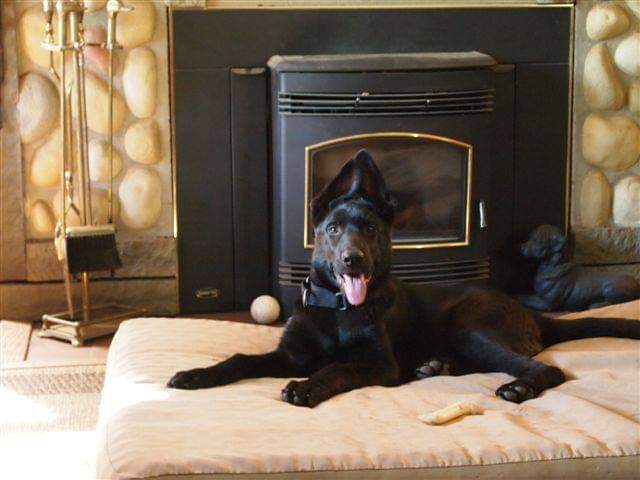
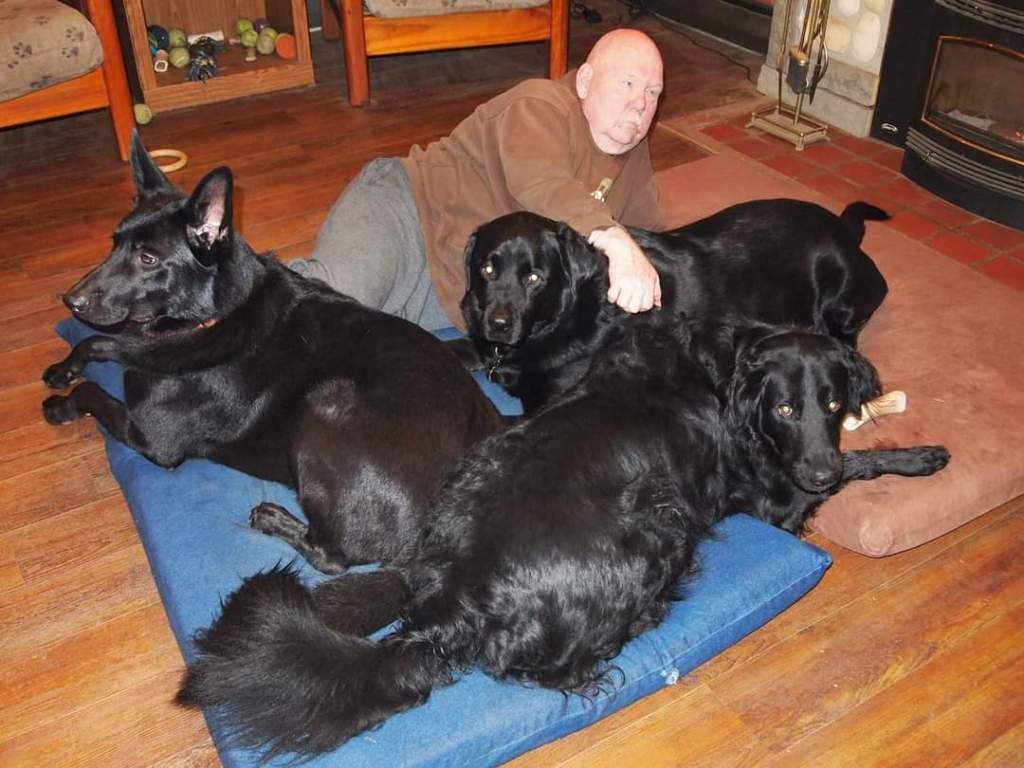
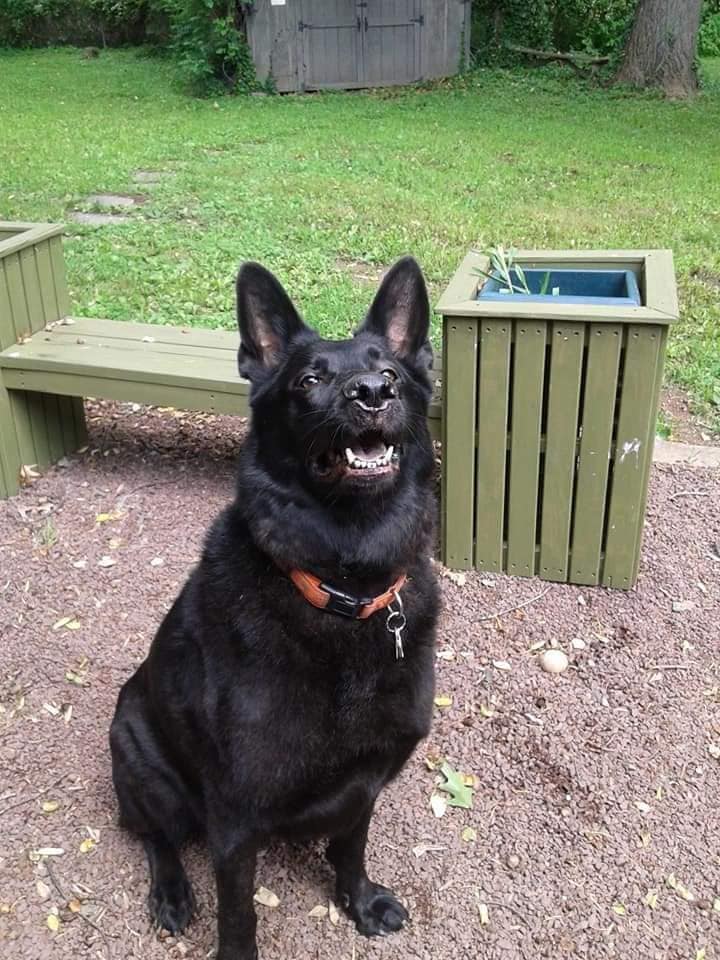
Thor was a 120-pound German Shepard and all black until the day he died. He was the last of his litter; surviving his brother Leo by a few weeks. His bark shook the house and often scared off people, but he was actually afraid of everything. He absolutely loved people, but scared them to the core. Maybe it was his size of color. I’ve heard many people express their distrust in black dogs. I suppose they are superstitious. If only people would have trusted us when we told them he was a wonderful dog. When given the chance, he was fine around people and soaked up all the pets and treats he could get his paws on.

We had never owned a German Shepard until Thor. Shepards possessed a distinct personality, very different from our previous hunting and mixed breed dogs. He was obedient and locked into us, especially me. I was actually nervous because Thor never took his eyes off of me, and he followed me everywhere. I never had a dog that stared at me. .I grew to appreciate it, especially the few times I fell, and he stayed with me until I could get back up.

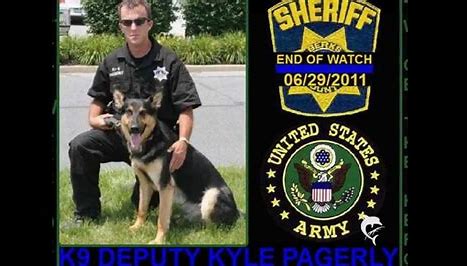
When my husband’s co-worker died in the line of duty, the entire department mourned the loss. Even though I never met K-9 Deputy Kyle Pagerly, his death hit close to home. The only way I coped was to write about the event, the officers involved, and on his K-9 partner, Jynx’s journey to second place at the Hero Dog Awards.

When Thor passed in April, we started looking for another dog. We had agreed years ago that we would adopt a grey muzzle. I wanted a retriever. My husband just wanted a dog. In less than a week, we had applied to three rescues, but unfortunately, our choices found other homes before receiving our application.

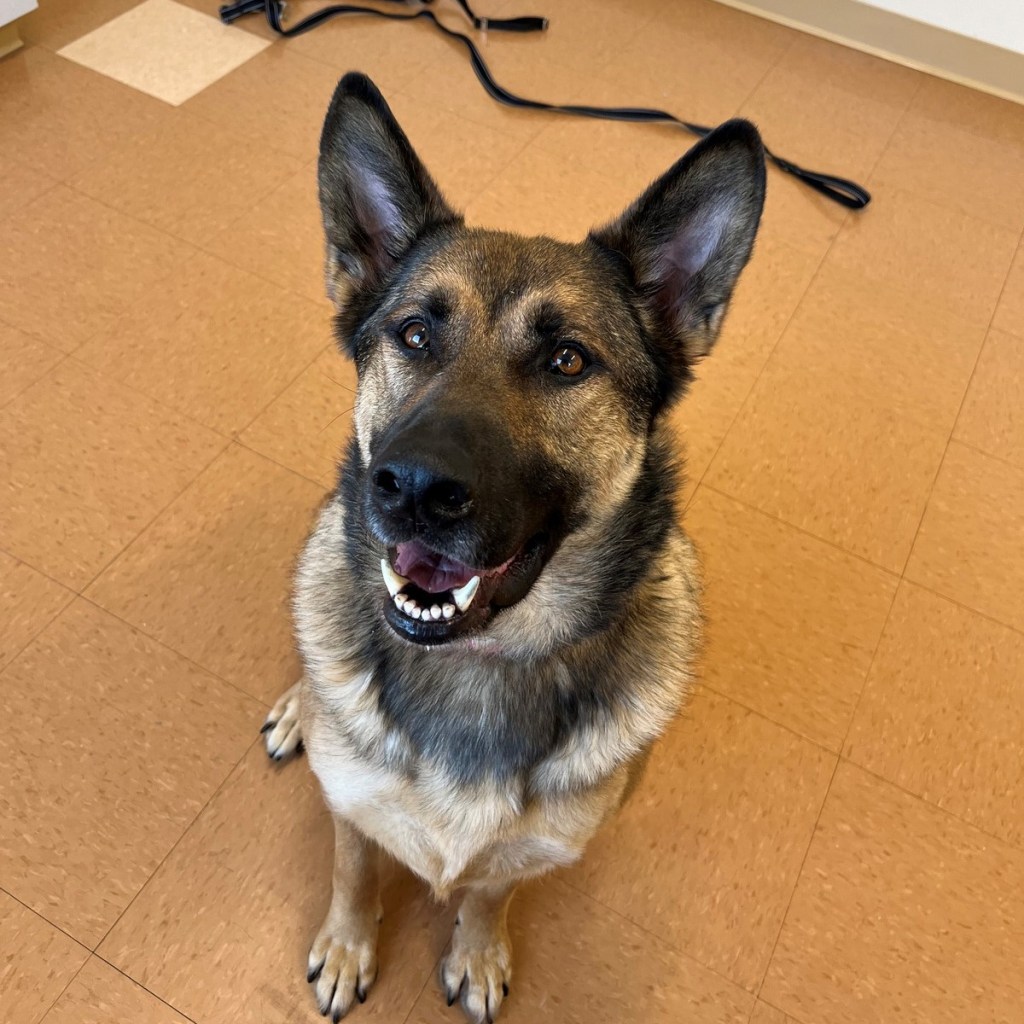
We started looking to shelters and saw a German Shepard names Sully. My husband quickly filled out the application and called the shelter to tell them he would be there in one hour. He fell in love despite Sully dragging the shelter worker on her butt down the hall. We would soon learn that Sully had several issues.

There was no cage in the car, but we have never needed a cage when we picked up a dog before. Why would this be any different? We had the leash, and Sully jumped right in. What could possibly go wrong?

I guess as we get older; we become complacent, disregarding the fact that he is still a two-time shelter return. Maybe we thought, “He knows to lie down and enjoy the ride like all the other dogs have done”.

We couldn’t have been more wrong. Bruce’s hour-long drive home was like unleashing a rabid racoon on crack inside the car. Sully barked at the top of his lungs, jumped over the seats, trying to get up front with Bruce, making undistinguishable siren like noises at every passing car, person,and dog he saw. With one hand on the wheel and the other holding Sully back, they finally pulled into the driveway.

Sully ran into the house and all I caught were flashes of tan and black as he jolted from room to room. It looked like a scene from Funny Farm. He stopped long enough for me to look him in the eyes and realize that we just inherited one crazy four-year-old high-energy dog! People our age should adopt grey muzzles that fit better into our slower paced lives. Not us. Sully was now ours, and our adventure just began.

Bruce introduced him to our fenced backyard. Sully saw a squirrel and chased after it, looking up as he ran across the yard, following the squirrel as they jumped tree limb to tree limb. Several birds flew to our bird feeders, and again, Sully chased after them, looking up as they flew away.

It must have overwhelmed Sully. Within the first hour home, he jumped the four-foot fence and disappeared. We had yet to register him with Home Again. Finding him was critical. We have a major highway near us. We did not know if he was street savvy. An hour later, a firefighter at our local station found him. Thanks to a Facebook user near me, Sully and Bruce were together again.

A week later, Sully jumped the fence. Bruce and the neighbor set out to find him. I stayed home, notified Home Again, several local online lost pet groups, and our local police department. An hour after trekking through the woods, tearing his pants, and getting cut by thorny bushes, Bruce found Sully a mile away on the other side of the highway. Sully was at a mini-farm was trying to herd sheep and a pig. Luckily, the animals were safe in pens. The owner tried to coral Sully, but as he tried to grab him, Sully saw a chipmunk in the owner’s rock pile and became obsessed with digging away the rocks.

The owner saw Bruce driving slowly up and down the street.

He flagged him down and said, “You look like a man who lost something.”

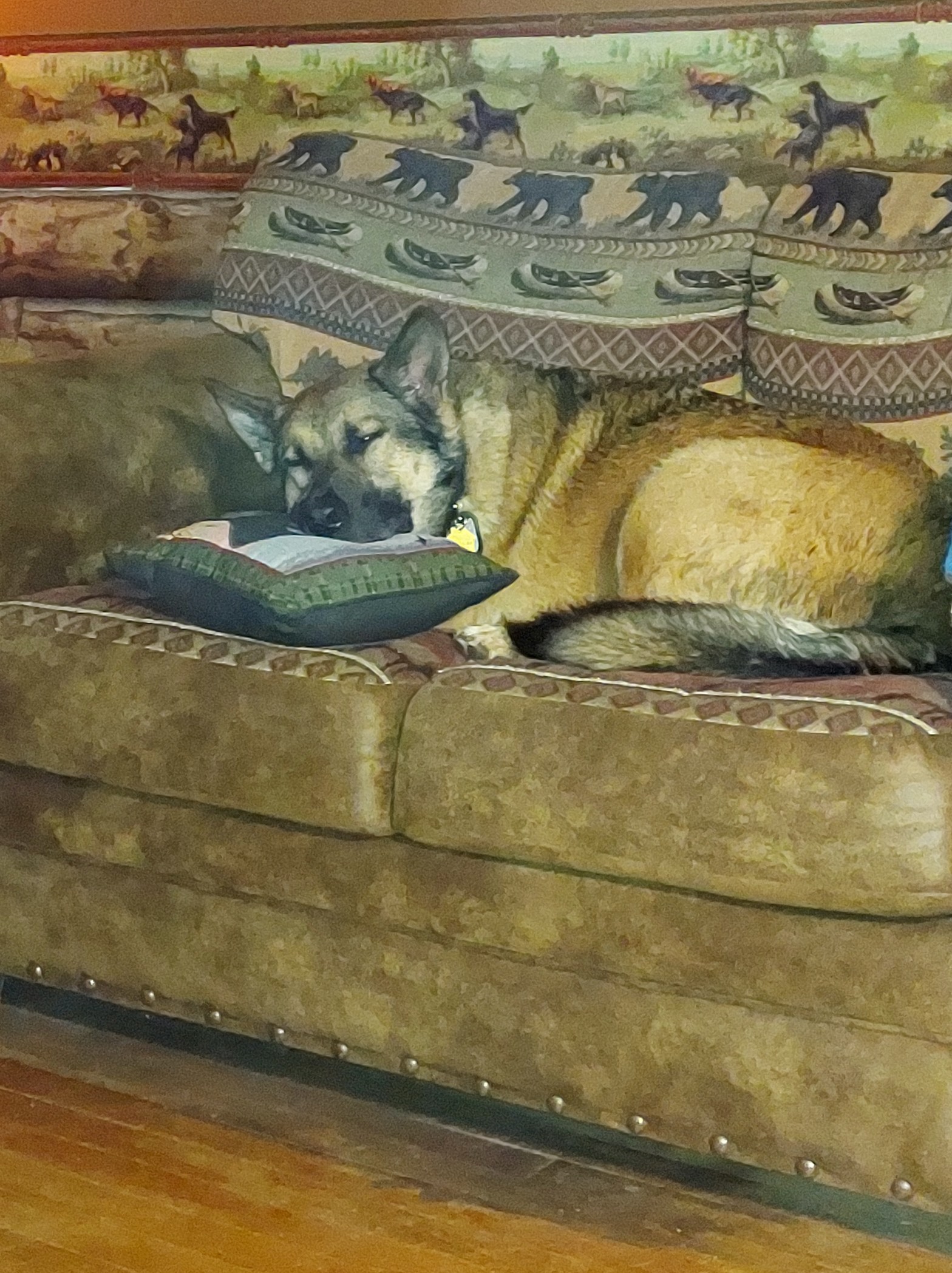
He brought Sully around the corner. Sully was fine, though covered in muddy water, algae, and his breathing sounded like a locomotive. Bruce brought him home and hosed him off. I was so happy to see him, but seriously wondered if this was the dog for us. After he dried off and smelled better, Sully jumped on the couch and settled down.

For the next week, he seemed to settle down enough that Bruce let him have free rein of the backyard. One week later, our neighbor called and said she just saw Sully jump the fence. Once again, Bruce and our neighbor set off to find him.

This time, an ambulance crew spotted him at the fire company, but he ran after a squirrel before they could grab him. For the fourth time in five weeks, they found Sully safe. The stress of the escapes was taking its toll.

We invested in the Halo GPS fence collar, but since being on a walker made it hard for me to train Sully, it fell on Bruce to get him obedient. We discovered another problem with training. Forty years of firearms training took its toll on Bruce’s hearing. He could not hear the warnings from the collar; therefore, he could not coordinate the correction timing with Sully’s actions.

We hired a trainer to help us. Though we could not address everything, Sully started listening better and calming down.

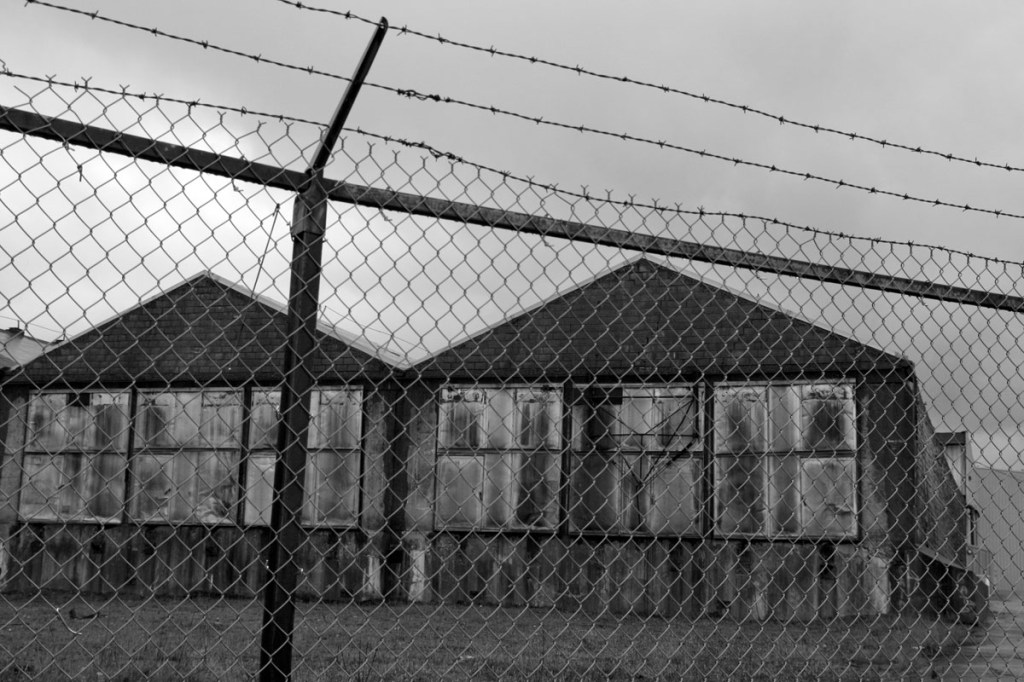
The fence issue still had to be addressed. People were chiming in to install a hot wire. We live in a neighborhood and have small children next door. That was out. I explained to Bruce that if we could raise the chain link place it at a 45-degree angle, Sully couldn’t jump. He agreed, but we didn’t know if it could be done. After a little research, we found what we were looking for on Amazon. To save a little money, Bruce installed it himself. A week later, he finished the fence, and to Sullys surprise, he could no longer escape. He tried at least fifteen times before giving up. Stalag 13 was complete, but instead of barbed wire, we used a vinyl coated wire. Sully was safe, and we could relax!

With all of this going on, I still had to focus on my full-time job and my health while also intervening with my mother’s nursing home regarding a medical issue.

As frustrating as the past few months have been with Sully, I’m glad we adopted him. They say it takes three days for a shelter dog to get used to a house; three weeks to adjust to their new owners; and three months to settle down. We are nearing the three-month mark with Sully and can honestly say he is a wonderful dog. There is not a mean bone in his body. With each day, he settles in more and more with us. He has a feeding, outdoor, and bedtime schedule and he sticks to it.

Adopted free dog.
*$100 donation to shelter.
*$45 Pet Key subscription mistake
*$15 Pet Key tag
*$24.99 Home Again Subscription
*$15.99 Metal oval Home Again tag
*$167 Initial Pet Exam
*$50 Dog cage for Subaru
*$600 Dog trainer
*$35 Nightengale collar
*$695 Halo GPS/ invisible fence collar
*50 Outside beacon chip
*$525 Pole extensions and wire mesh for existing fence
*$60 Toys
*$58 couch cover

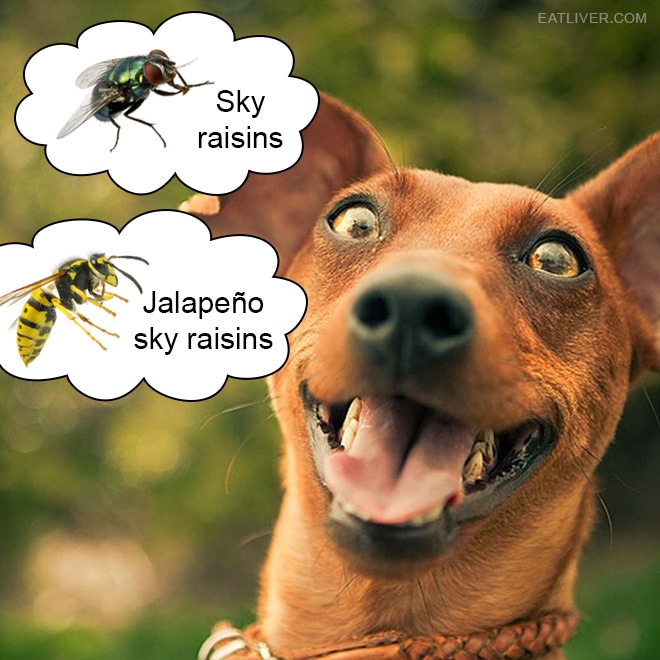
We love him despite his rough start. There are still a few issues to deal with, but he’s in his forever home with a patient family that tells him every day what a good boy he is. We will continue to address his remaining neurotic issues…like incessant barking at delivery trucks, Harley-Davidson motorcycles, fire sirens, nail biting and chasing sky raisings.

Sully total to date $2,440.98. The love we have for this neurotic dog and the love he shows us; PRICELESS!

Goodbye Thor, my Faithful Friend

The outdoor writer Gene Hill once wrote a poem called “He’s Just My Dog”. As I sit here thinking about my 12-year old German Shepherd that I had to let cross Rainbow Bridge this weekend, my eyes swell with tears as I recall the adventures, the funny and sad times I shared with all of my dogs since I was a child.

No matter what has happened in my life, my dogs have never left my side. These gentle souls have comforted me through illness, death, lost jobs, and dreams. Somehow, they knew when my day was bad, and they knew what to do to cheer me up. Mostly, their carefree, silly antics made me smile and my bad day forgotten. The soothing feeling of running my hand over and through their fur, massaging their ears or under their chin, and simply rubbing their belly somehow eliminated all of that stress and anxiety that built up throughout the day. No matter how bad my day was, I could always count on their loyal companionship. When my day deserved a celebration, they were there for that as well. 

Twelve years ago, my husband’s co-worker, Berks County (PA) K-9 Deputy Kyle D. Pagerly lost his life in the line of duty serving a fugitive warrant. His canine, a German Shepard named Jynx, grabbed Kyle’s clothing and started pulling Kyle’s body toward the safety of U. S Marshalls, sheriffs, and SWAT members who were part of the fugitive warrant team. The loss affected the law enforcement community and the county in a way I had never witnessed, despite losing colleagues in law enforcement when I was an officer. Kyle’s wife was pregnant with their first child when he died. The support she received from the sheriff’s office and the community was amazing. They even supported Jynx as the nation voted him as the runner-up in the National Hero Dog Awards. I did my part covering the story for a local newspaper and following Jynx’s journey to the awards ceremony in Los Angeles.

People lined the streets as the funeral car left Lehigh Valley Hospital to return Kyle to the funeral home. They saluted and waved flags in a show of respect that is quickly disappearing from our country. Kyle’s funeral drew law enforcement representatives from across the nation, many bringing their K-9’s with them to say goodbye. Reading, PA seemed to have shut down. Jynx was retired and went to live out his years with Kyle’s wife and daughter. Deputies grieved in their own way. The department printed up shirts and sweatshirts, which they sold to the public and held fundraisers to build a new K-9 training center. Some deputies went out and had a tattoo of a paw print with Deputy Pagerly’s end of watch date. Others went out and purchased German Shepherds or Belgian Malinois’.

Deputy David Gabrielli had retired as a City of Reading (PA) K-9 officer and he bred shepherds. His female, Princess, had a litter on April 2, 2011. Knowing some deputies may like to adopt a pup to honor their fallen co-worker, he spread the word throughout the sheriff’s office. Two pups went to deputy’s families. My husband and I were one of those lucky families, adopting a 14-week old pure black Shep who we named Thor after the God of Thunder.

It is always hard to choose the right puppy when there are several romping around and clumsily falling over each other. This time was a little different. One black pup played a little but then stood back; his ears coming together like a Bishop’s miter. I fell in love with his ears. I knew he was going home with us.

I held him the entire way home and couldn’t wait for him to meet his brothers: Hunter, a colossal Rottweiler, and Nate, a Flat-Coated Retriever. Our new puppy screamed at the top of his lungs at the site of our 185# Hunter. Nate loved having a puppy. Soon Nate was dragging him across the floor by the leg because Nate wanted to play and all Thor wanted to do was sleep. The three became inseparable. Watching how they grew, bonded, and played together was beautiful.

Sadly, for the past 5 years, I have been down to only Thor. The rest have passed on, each taking a small part of my heart with them, but leaving me wiser and more compassionate. They taught me how to love unconditionally. For that, I will be forever thankful and will never forget them. I will always need my dogs more than I need people. Dogs bring peace to a hectic, stressful life and remind me every day that life is to be enjoyed, that family is first, and that love is unconditional.

I have never liked the idea of taking a dog to a vet’s office and having them euthanized on a cold, hard floor in a place that they feared. I had a vet come to my house years ago to put one dog down and the experience, though never good, was more bearable and the dog was less anxious. My husband and I knew Thor’s time was coming, so we set out to find a vet who would come to our house when the time came.

We asked around and researched mobile vets. I knew from a previous series that there were mobile vets; I just didn’t know they were near me. There was a mobile vet near us who cared for senior pets, provided hospice care, and would euthanize them in the home. We established a relationship with Dr. Stephanie Freed of Golden Years Veterinary Services several months ago when Thor could no longer get into the vehicle to go to our regular vet. We tried everything we could without putting Thor through uncomfortable procedures that would not cure the failing spinal cord and lameness issues.

This weekend, Thor could no longer get up and walk. He crawled inches at a time just to get near us, panting like crazy and extremely anxious. His bodily functions were ceasing yet he was alert and eating heartily. I read one time that the hardest part of loving a dog is the day we say goodbye. We couldn’t let him suffer and as much as it hurt us and left our home empty and quiet, we had to do what was best for him.

Dr. Freed came to the house and with all the compassion and care, we positioned Thor on his favorite bed, where he took his last breath with my husband and I by his side. It was more peaceful than anytime we went through this before. Euthanasia is never a straightforward decision. When a dog’s quality of life deteriorates like Thors had, our feelings need to be secondary and we do what is best for the dog, no matter how bad it hurts.

I am so thankful to Dr. Freed. Thor was just a dog to most that knew him, but he was part of our family and our faithful friend, who helped through that chapter of our lives that we think about every day. Goodbye my friend until we meet again.

HE’S JUST MY DOG by Gene Hill

He is my other eyes that can see above the clouds;
my other ears that hear above the winds.
He is the part of me that can reach out into the sea.
He has told me a thousand times over that
I am his reason for being;
by the way he rests against my leg;
by the way he thumps his tail at my smallest smile;
by the way he shows his hurt when I leave
without taking him. (I think it makes him sick with worry
when he is not along to care for me)
When I am wrong, he is delighted to forgive.
When I am angry, he clowns to make me smile.
When I am happy, he is joy unbounded. When I am a fool,
he ignores it. When I succeed, he brags. Without him,
I am only another man. With him, I am all-powerful.
He is loyalty itself. He has taught me the meaning of devotion.
With him, I know a secret comfort and a private peace.
He has brought me understanding where before was ignorance.
His head on my knee can heal my human hurts.
His presence by my side is protection against my fears
of dark and unknown things.
He has promised to wait for me……whenever
……wherever — in case I need him.
And I expect I will — as I always have.
He is just my dog.

THE YELLOW DOG PROJECT

Protecting your dog and others

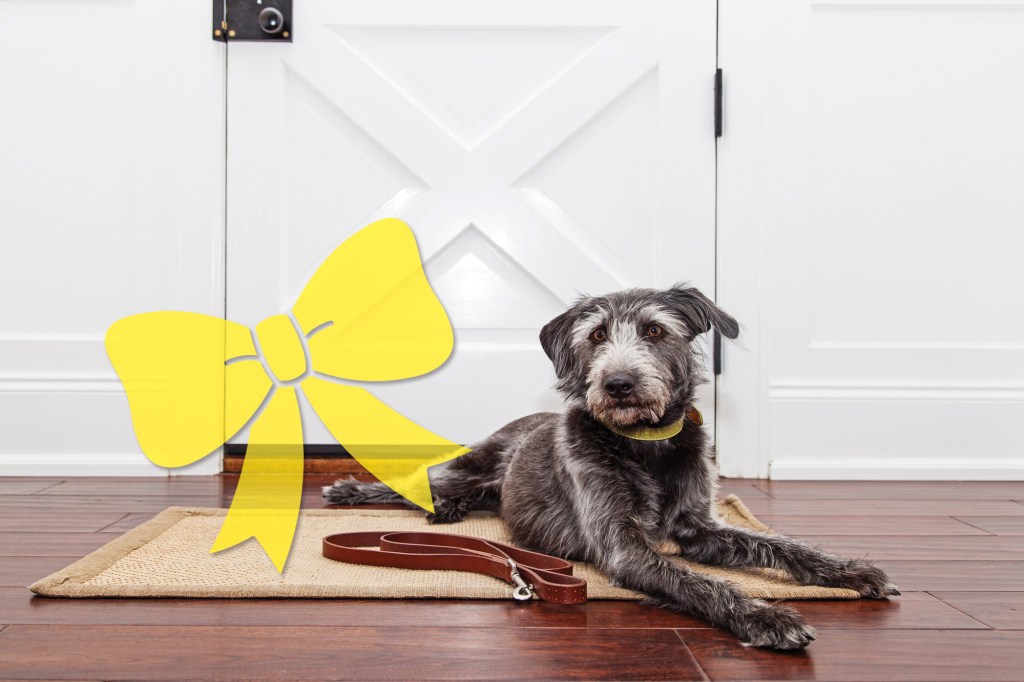
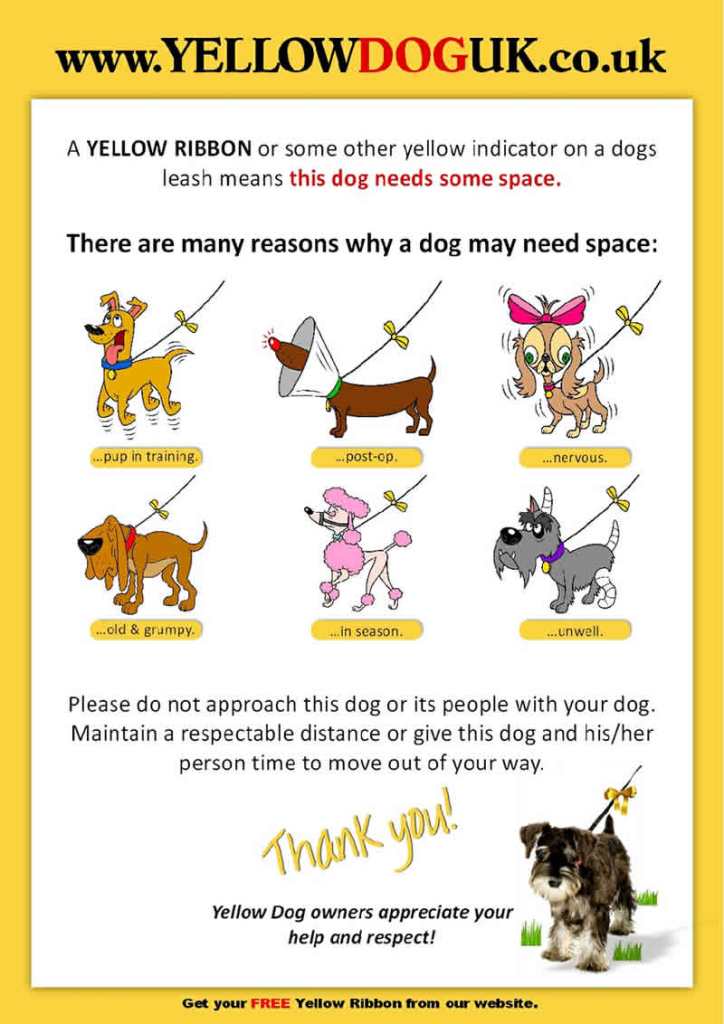
Have you ever seen a dog that needed more space from other dogs or people? What if I could tell you that there has been a way to identify these dogs in public since 2012, yet many dog owners are unaware of this simple method? What if I told you that there is an international effort to help dogs to have their own space while also educating their owners and the public? The effort is called the Yellow Dog Project, and it identifies these dogs with a simple yellow ribbon on the leash.

Why would a dog not want to be touched?

  • They may be recovering from a painful surgery
  • They may be ill
  • They may be old and tired
  • They may be a rescue/shelter dog who is still stressed and anxious
  • They may be in training with all of their focus on their owner’s commands
  • They may be a service dog whose focus is solely on providing a service for the owner’s well-being without interference from others
  • They may be “in season”
  • They may have been trained as protection dogs who will react if they or their owner feel threatened
  • They may want to be left alone

So many people expect all dogs to be cuddly, family pets and sadly, too many owners believe their dog will never bite. Why? The dog is friendly at home, plays with the children and has never shown aggression. 

With more people owning dogs, it is even more important today that owners protect their dogs, other dogs, and people around them from being bitten or attacked. Understand your dog’s everyday behavior, what makes them anxious, the effects of medication such as steroids which may cause depression, anxiety, or even aggression. Taking steps to protect everyone is responsible dog ownership.

Many behaviors a dog exhibits are predictable and are similar for people.sickness, If they are ill, recovering from surgery or a sickness, expect them to be anxious. Dogs do not understand surgeries, splints, stitches, or missing limbs. Communicating with the veterinary staff is harder and depends on expression and body language. Dogs cannot focus or hear well while recovering from anestheanesthesia,sia which will be unnatural for them. They do not know who all the strange people are that are poking and prodding them or why they are stuck in a cage attached to another cage with unfamiliar animals and scents. They do not understand why their family is not around to protect them.

Even service dogs can be seen donning yellow vests or bandanas. Err on the side of caution when a dog dons yellow. Service dogs often show no aggression.  They are at work and need to focus on their handler. The same rules apply as if they needed space.  

Know the signs of anxiety. If any of these signs are seen regularly, it is time to see the veterinarian.

  • Panting
  • Excessive yawning
  • Salivation
  • Obsessive licking
  • Gazing around
  • Drooping ears
  • Lowered body language
  • Tucked tail

Your dog may be anxious around people or dogs they do not know. If the dog senses fear, this may lead to a traumatic event for all. This is where the Yellow Dog Project can help everyone. Always keep your dog on a leash in public. Yellow dog ribbons quickly identify your dog as needing space. As word gets out about the Yellow Dog Project, the public will understand that you are trying to prevent unwanted situations for your dog. By giving the dog space, others are helping you refocus the animal’s attention and reduces the animal’s psychological stress during health and behavior rehabilitation.

Never assume that everyone knows what a yellow ribbon means.

If your dog has a yellow ribbon and someone approaches your dog:

  • Simply redirect the dog by pulling gently on the leash and turning away from the approaching person until you are at a safe distance.
  • Educate the approaching person in a slow and quiet voice. A loud voice may startle the dog or others in the area, setting off an unwanted chain of events.
  • Explain that the yellow leash or ribbon means the dog needs space and that it is for everyone’s protection.
  • Never assume your cute, cuddly dog is friendly, especially if YOU had a reason for identifying the dog as needing space.

If you see a strange dog and there is a yellow ribbon attached:

  • Always ask the owner before reaching down to pet a dog.
  • Avoid direct eye contact with the dog, as they view this as a sign of aggression.
  • Position yourself lower, without losing your balance, to be the dog’s size.
  • Never move quickly or run toward the dog.

To learn more, check out the Yellow Dog Project or DINOS: Dogs in Need of Space.

Compassion Fatigue and Veterinary Suicide Part 5: You Are Never Alone

Over the past several weeks, I have tried to bring attention to a very real problem facing the veterinary profession. I am not a veterinarian, nor do I work in the veterinary profession. I write as a freelancer when time permits, and have written many articles on rescues, shelters, pet placement services for active military personnel, and service dog organizations over the years. When a vet tech friend of mine suggested last year that I write a little article on compassion fatigue and veterinary suicide, I told her I would consider it. I honestly never heard that suicide was an issue that was affecting the veterinary profession, but I had to push it off until I had more time to look into the issue.

What I discovered over the past several weeks brought tears to my eyes. I found it hard to actually write on the sensitive topic as I kept picturing myself in the veterinarian’s shoes. I felt myself drawn into their world and wondering how I would manage the same issues if I was faced with them every day. I love animals, writing and sharing information with others. Like most little girls when I was in 2nd grade, I wanted to be a veterinarian. My parents were very honest with me and said they would be unable to help me financially. As I got older, I accepted that and went into an unrelated field. I was able to work for a very short time in a small animal practice while going back to school in my early 20’s, but then I faced two situations in one day that did not set well with me:  assisting the veterinarian with the cropping of a Doberman puppy’s tail and docking it’s ears and then assisting the vet with the euthanasia of a 12 year old dog who, despite some physical disabilities, was a healthy senior. I wanted to ‘save’ the dog from death and became emotional. Why couldn’t the veterinarian tell the client no to euthanasia? I learned that day that working in a veterinary practice was not for me and sometimes, the decisions they have to make are not easy. Thankfully, the veterinarian in charge that day, pulled me aside, explained why the position was not be a good fit for me and I was released. After writing this blog series, I now understand more fully and have to say I am very thankful for her honesty. If those two incidents are still vivid in my memory after 35 years, I can only imagine how the job would have affected me on a daily basis. She spared me a lifetime of mental health challenges.

This topic was too important to rush through and just bullet issues, and I tried to cover many issues. However, two issues I did not delve into were HIPAA and the availability of controlled substances.

The first time I was handed a HIPAA form at a vet, I admit I was taken back. Why would my veterinary office be handing me a Health Insurance Portability and Accountability Act form for my dog when it is designed for the human healthcare industry? I recently learned why. Attached to every animal is a human and that human’s financial and personal information is collected by the practice and must be protected. Maybe HIPAA is not the correct wording for this form; however, veterinarians are required not only to secure their clients information but also are required to abide by the Principles of Veterinary Medical Ethics (PVME). Though the PVME is comprehensive, under the Principles with Supporting Annotations, it specifically states under Section 5.1:

“Veterinarians and their associates must protect the personal privacy of clients, and veterinarians must not reveal confidences unless required to by law or unless it becomes necessary to protect the health and welfare of other individuals or animals.”

When complaints are posted on social media, veterinarians and their staff must not violate HIPAA or the PVME. For them, it is best to not respond and ensure the trust with clients is retained. Sadly, they are unable to defend themselves from cruel and one-sided defamation which can have long lasting effects on their practice and their reputation.

With the ease of availability to controlled substances and the knowledge how to use these substances to humanly end to a life, it unfortunately makes this a more accessible option for those contemplating suicide. I will not go into details on this option since there are so many other factors involved with controlled substances which are critical in the veterinary profession.  However, I am sure control measures will be looked at in more detail over the years in an attempt to minimize the possibility of suicide by veterinary staff through this means.

The bucolic lifestyle of an animal loving veterinarian living in the Yorkshire countryside and made famous in the James Herriot books was a ‘perception’ created by Alfred Wight to help him deal with his own depression in the 1960’s, yet this ‘perception’ resulted in many entering the veterinary profession. It is not until that perceived lifestyle has slipped out of reach, when the debts become unescapable, when a procedure does not go as expected, when clients yell, scream and post disrespectful comments on the practice’s website, will the veterinarian begin to ask themselves over and over what went wrong. Society has become demanding; expecting veterinarians and staff to have all of the answers, to be open 24/7, to have more access to fancy expensive diagnostics, pharmaceuticals, and treatment. On top of this, clients balk at paying for the services and complaining of the excessive costs every time they have an appointment, when in reality, they may only visit the vet once or twice over a several year period. The hours are long, the demands keep coming, but the gratitude and praise are less each year.

As I wrap this up, it is my hope that those in the veterinary profession that have been following these posts realize that they are not alone. Mental health is no longer considered the stigma it once was. Help is always a click or a phone call away, and as more people become aware that the veterinary profession faces a crisis, the more resources become available to help those in need.

I hope that veterinary staff will unite when they suspect a colleague is struggling; that they will initiate QPR which means to question, persuade, and refer those in need to available resources which can help them through tough times.

I also hope that clients will learn to be more patient, kinder, and understanding toward their veterinarians and the staff. They are doing their absolute best under the parameters of the law with the knowledge and resources they have to keep pets happy and healthy under stressful conditions.

So how do veterinarians work through the mental health and financial challenges that haunt their profession? Instead of going into detail. let me highlight a few key points.

  • Learn to protect your own needs:  physical, mental, and emotional. This also means learning to say NO.
  • Identify your personal goals and objectives
  • Improve employee teams:  insist staff take scheduled breaks, lunches, and time off
  • Offer benefits; support wellness programs such as gym membership; offer an Employee Assistance Program (EAP) or an insurance which includes mental health benefits
  • Provide training and growth opportunity
  • Allow paid time off when a pet dies
  • Understand the legal parameters in which the vet tech is allowed to perform and identify opportunities to utilize them more fully

AVAILABLE RESOURCES FOR VETERINARIANS/SUPPORT STAFF/STUDENTS

  • Not One More Vet Home | Not One More Vet (nomv.org)
    • NOMV helps veterinary professionals through peer-to-peer support, financial support grants, education presentations, and by collaborating with partner agencies to extend services to the veterinary community. When we say veterinary professionals, we mean everyone – veterinarians, veterinary technicians, veterinary students, and veterinary support staff. 
    • Online support also includes How to Deal with Cyberbullying, Help for Compassion Fatigue, Access to Crisis Intervention Training, Crisis Numbers for the United States and Abroad, and Facebook Forum Groups:  Not One More Vet, Not One More Vet Support Staff, and Not One More Vet Student
  • American Veterinary Medical Association We are AVMA | American Veterinary Medical Association
    • Online resources, annual wellness summit, Train-the-Trainer courses, Free Access to QPR (question, persuade and refer), ProQOL Assessment (professional quality of life assessment – balance of positive & negative, personal, and work experiences)
  • Merck Animal Health Veterinary Wellbeing Study | Merck Animal Health USA (merck-animal-health-usa.com)
    • Collaboration with AVMA and NOMV, provides links, resources studies and toolkits
  • Mighty-Vet Homepage – MightyVet 2021
    • On demand Continuing Education, Global Mentorship Program,  Office Hours with Industry Professionals and Thought Leaders Globally, Free Continuing Education
  • Mentor Vet About — MentorVet
    • A national mentorship program designed to help newly graduated veterinary students in the United States with locating mental health interventions.

In regard to your clients and the public, consider posting the following in your facility, on your website, or offering it as a handout to clients. Feel free to curtail it to your practice.

Dear client: We value you as a client. As we navigate through the continued COVID-19 fallout which has affected all of us, we ask that you remember that veterinarians and their staff are humans and are doing their best to help your pets with the in-depth knowledge they have gained through their education and experience. Here are a few tips that can help us service you better.

Veterinarians are on your side and want to provide the absolute best care for your pet. I hope this 5-part series helped shed light on this growing issue not only for veterinary staff but also for the general public.  I have learned so much and will do what I can to get the word out to help a profession who has always gone above and beyond to keep my pets healthy.

  • Trust your veterinary team and take an active role in following our advice. We are on your team.
    • We are well educated and will always give our best professional advice in regard to your pet as well as alternatives if they are available. If you choose not to follow this advice, those decisions may have irreversible consequences or lead to other conditions such as obesity, diabetes, arthritis, or early death.
  • Be patient, kind, and understanding. Ask the vet and staff how they are doing when you see them. Let them talk. They will not discuss another client’s case, but it may allow them the time they need to gather their composure after something very emotional.
  • Be reasonable and rational when on-line. If you do not have something nice to say, do not say it.
    • Post positive reviews whenever possible. If there is a disagreement with a veterinarian or their staff, be a mature adult and ask to speak to them regarding the issue in private.
    • Negative words affect personal and professional reputations as well as business operations, but they could also open up legal ramifications against the poster.
    • Due to the Principles of Veterinary Medical Ethics (PVME), reviews will always be one-sided.
  • Be flexible with appointments. Plan far enough in advance to reserve your preferred provider. Be clear about what you plan to discuss and your expectations.
  • Plan refills for your pet’s medication by using their preferred method.
    • Prescriptions need to be signed off by a veterinarian and we prefer to do this at one time rather than interrupting someone else’s appointment to sign your prescription.
  • Thank the veterinarian and the staff by sending a card, dropping off cookies, or updating us on how our recommendations are helping your pet recover, lose weight or have more energy.
    • A simple thank you goes a long way to let staff know they are appreciated.
  • Be a responsible pet owner. Keep up with routine care and preventatives
  • Own your financial responsibility.
    • Obtain pet insurance, have a separate savings account, or credit card to help with unexpected costs that arise. Setting aside so much per week will enable the amount to accrue and it will be there when needed.
  • Make sure you do not have more pets than you can responsibly manage. Pets are luxuries not impulse decisions and require time and money. One pet should not have to suffer or go without so another can thrive. The more you invest in them, the more they will thrive.
  • Veterinarians and their staff NEED time to decompress. When they are not working, refrain from asking for advice. Focus on helping them find a healthy work-life balance: go out to eat, go to a movie, a concert, sports game, a hike, the beach…but do not talk about work.
  • If, during a visit, you sense a staff member is struggling emotionally, do not hesitate to ask if they know about Not One More Vet (nomv.org).

Thank you from your Pet’s Healthcare Team!

Veterinarians are committed to the well-being of animals but with such dedication, long hours and numerous stressors, their mental health is challenged every day. They want to provide the absolute best care for animals, but they also need to take care of themselves. Resources are available but they need to be aware that they are available.

I hope this 5-part series shed light on this growing issue not only for veterinary staff but also for the general public.  I have learned so much and will do what I can to get the word out to help a profession who has always gone above and beyond to keep my pets healthy.

I want to give a special thank you to Stephanie for bringing this topic to my attention and to Jen for her professional insights. I highly recommend anyone in the veterinary profession that is struggling to overcome a challenge to head over to Not One More Vet (NOMV.org) or one of the other sources identified above. The partnerships and resources they share are exceptional. Knowing that you are never alone can make all the difference in the world.

Compassion Fatigue and Veterinary Suicide Part 4: Financial Stress and Cyberbullying

Financial Stress and Cyberbullying. Why these two issues are so overwhelming.

Financial Stress

The veterinary profession is a rewarding field, but it is definitely not without its dark side.  In the last post, I addressed euthanasia and the toll it takes on the entire staff.  I also briefly touched on their financial stress. Let’s take a closer look at the financial impact on mental health. Isn’t repayment of a higher education loan a ‘normal’ stressor which many people face upon completion of a degree?  If that is true, why should veterinarians feel that their financial stress is so different? 

According to Not One More Vet, the AVMA reports that in 2020, ‘the average educational debt for that year’s veterinary school graduates was $157,146 with the average debt for those with debt being $188,853 and over 30% had at least $200,000 in debt’ (AVMA, 2021).

The additional debt incurred to achieve the DVM degree sets these young energetic students back $157,146-$200,000 in addition to a debt may have been incurred for their bachelor’s degree. If they are fortunate, they may be able to obtain scholarships or other financial assistance which does require repayment. Sadly, that is not the norm for many. With such a large debt upon completion of their DVM degree, one may assume that they would earn a large salary immediately. The sad truth is the majority do not.

In a blog post by Associated Veterinary Partners on the Not One More Vet website, titled The Veterinary Mental Health Crisis Part 1 of 2: The Root of the Problem, they discuss “the cost of veterinary medical school in the US is well in excess of $200,000 and veterinarian salaries fall on average about 2.5x lower than physician salaries despite a similar level of educational debt. Decades of financial stress often follow veterinarians beyond graduation and can snowball with all the other stressors in their lives. Heavy indebtedness has been linked to poor mental health outcomes, meaning that the student debt crisis is playing a role in worsening the mental health crisis in veterinary medicine.” https://www.nomv.org/2021/09/12/the-veterinary-mental-health-crisis-part-2-of-2-where-do-we-go-from-here/

This is not just in the United States, but it is a global issue.

According to My Veterinary Life AVMA Veterinary Salary Estimator for Current Students – AVMA My Veterinary Life, the 2022 average starting salary for a 27-year-old companion animal exclusive veterinarian in Pennsylvania working an average of 50 hours per week in a suburban community is estimated to fall between $72,440-$107,494.  Using the same criteria for Massachusetts, this falls to $67,004-$106,526 and falls even more when looking for work in the heartland of America.  In Kansas, the starting salary falls between $61,885-$102,282.  Considering these average starting salaries are similar to those leaving college with a bachelor’s degree or finishing a trade school, it is understandable that the financial stress on a veterinarian is enormous when their debt is much higher. After a few years, they may reach an average mean salary of $108,153.

Two leading veterinary schools, Penn Vet University of Pennsylvania and the Cummins School of Veterinary Medicine at Tufts University, are each on the high-end spectrum of the tuition costs between $54,742 and $56,322 annually.  An additional $28,302 to $38,844 should be available annually to cover insurance, labs, housing, textbooks, clinical rotations, and other supplies to name a few items but these costs are not etched in stone.  As one can see, without doing their research for an education that would be financially within their reach or looking into financial assistance, a student’s mental health could easily be affected well into their career. (Penn Vet and Cummins Vet School costs at bottom of page)

Hopefully, students do their research before committing to a particular school to uncover more affordable options available in the United States, but even then, the debt, with the bachelor’s degree, may still be around $300,000-$350,000. That is a reality. A list of available scholarships can be found at the American Veterinary Medical Foundation website https://www.avmf.org/programs/student-scholarships/.

Add to this debt inflation, rent or mortgage, property, health, auto, business insurance including medical malpractice and/or professional liability insurance, car payments, and if a practice owner, add the cost of benefits, equipment, training, and hiring, etc.  The expenses skyrocket without the salaries keeping up with inflation.

If one is fortunate enough to have their bachelor’s degree paid off before embarking on a DVM degree, the debt will be greatly reduced. Available scholarships should be considered. The American Veterinary Medical Foundation is a good place to start. How Much Is Vet School? What Students Pay for a D.V.M. – NerdWallet.

Financial planning is critical to success, especially when one incurs such a large debt by choice. Financial security plays such a huge part in the stability of one’s mental health, and unfortunately, when these decisions are being made about a career, the student is usually young, inexperienced and has not considered the impact on their future. The results can easily make a person feel as if they have no other way out but suicide.

When that debt keeps rising, and the salary is not keeping up, what is a veterinarian to do? For current veterinarians, students, and veterinary staff, confidential peer support groups are available to discuss issues, obtain support and get recommendations for assistance. Such sources can be found at one of three Not One More Vet private Facebook Groups: Not One More Vet, Not One More Vet Support Staff, and Not One More Vet Student.

Social Media & Cyberbullying

While veterinarians and their staff do their best to care for each animal they treat, not everything will go as it should, just as it doesn’t always go as it should with human procedures.  And just as in the human medical field, smaller practices are swallowed up by corporations resulting in procedures and appointments times being closely monitored. Communications also seem to have been affected in some practices and not always for the better.

Sadly, in this new age of posting everything on social media, the veterinarian and staff must now also deal with cyberbullying on top of their financial worries. Not One More Vet (NOMV) describes cyberbullying as: ‘using direct comments to or about individuals, naming individuals, or using their photos online in ways designed to harm their professional or personal wellbeing. Cyberbullying has real and detrimental effects on the wellbeing of those targeted, and at least one in five veterinary professionals has reported being one of them.’

In a post I recently saw on-line through a community social media site, I watched as a client described her experience at a local vet with her one-year-old healthy black Labrador retriever that underwent a routine neutering, developed other sudden issues, and passed away six days later at a different vet. The neutering veterinarian and practice was named.  As with all on-line posts, this was one- sided. There was no input from the veterinarian or the staff, but quickly garnered over 180 views and over 130 responses.  The practice and doctor were chastised, several responders called for legal intervention to include suing for malpractice, pain and suffering, reimbursement for all vet bills, and the cost of the dog’s purchase. One reply even vilified the veterinarian for thinking they were God because of their education. Two practices which were unrelated to the alleged incident were brought up, named and chastised for negligence for unrelated incidents.  Many said the original veterinarian should be terminated…never to practice as a veterinarian again, but the ripple effect of the post will most certainly have undesired consequences, not only on the original practice and veterinarian but unfortunately also for the other practices that were mentioned. 

With all of the negative responses I read, one thing was very clear and that was ‘how the client felt’ with the ‘reaction’ by the veterinarian and the staff.  This is huge and this is where communication is critical. I can see many things that could have been done differently on both sides by simply communicating so I will not choose sides. I will; however, address options in my final post.

It is important to understand that the training received in veterinary school on financial well-being, business operations, cyber bullying and how it affects one’s mental health is practically non-existent, although this is starting to change. Communication is also critical as some find it easier to ‘talk’ to the pet rather than an irate client.

Many people struggle with finances trying to make ends meet. They struggle with their professional reputation being smeared across the internet and their local communities. It can become overwhelming at times as well as mentally and physically challenging. When threats of violence enter the picture, the overwhelming feeling of depression, anxiety and fear escalate. The veterinarian wants to help the animal but when clients start bullying, either in person or on the internet, their job becomes more difficult, and their mental health starts to get compromised as they begin questioning their own professional actions.

Education on mental health, finances and cyberbully are coming both during the veterinary program and for seasoned veterinarians. Organizations such as Not One More Vet https://www.nomv.org/ and Mighty Vet https://mightyvet.org/ offer education to help veterinarians and students understand issues on mental health. But there is so much more, especially on Not One More Vet. If one needs a confidential peer support group, it is here.

Penn Vet has hired a financial counselor, a career counselor and mental health counselor for both their Philadelphia and New Bolton campuses to help students with understanding and addressing financial issues. https://www.vet.upenn.edu/education/vmd-admissions/paying-for-your-education/financial-assistance

Veterinary students can look to the AVMA for resources to help them understand and calculation loans and learn early on how to manage their financial well-being. https://myvetlife.avma.org/current-student/your-financial-health.

American Veterinary Medical Foundation (AVMF) identifies scholarship opportunities which students should consider when applying for admission to a veterinary school. https://www.avmf.org/programs/student-scholarships/

In my final post, I will highlight what resources are available to veterinarians so they may help themselves and their co-workers and I will also identify what measures pet parents and the general public can take to help end compassion suicide and veterinary suicide.

Compassion Fatigue and Veterinary Suicide Part 3: Mental Health Challenges

Dr. Sophia Yin, age: 48
Died by suicide 09/28/2014

BURNOUT V. COMPASSION FATIGUE:  The importance of understanding the difference

  • Is burnout, which so many people experience at some point in their life, the same as compassion fatigue?
  • What exactly is compassion fatigue?
  • Why does compassion fatigue, if left untreated, affect the veterinary practice and lead to thoughts of suicide or committing suicide?

Burnout is ‘a state of emotional, physical, and mental exhaustion caused by excessive and prolonged stress.’  It is often associated with the workplace, and is a consequence of stressors in the work environment. These can be an overdemanding boss, long hours, inadequate pay, and poor benefits. Oftentimes, a simple change of the work environment can help with burnout and life goes on with little interruption.

Compassion fatigue, also known as ‘secondary traumatic stress disorder,’ is much different. There is no doubt that this is more serious and follows a person despite leaving the environment where it originated. Without proper management and treatment, compassion fatigue can lead to not only thoughts of suicide, but with some, like Dr. Sophia Yin, Dr. Shane Cote, and numerous others; suicide was the end result.

According to the statistics at the US Centers for Disease Control and Prevention as well as Auburn University Journal of the American Veterinary Medical Association (JAVMA), from 2003-2014, male veterinarians died of suicide at a rate of 1.6% higher than the national average, with 51 % choosing firearms and 33% choosing to overdose. During the same time period, female veterinarians who committed suicide were 2.4% higher than the national average with 18% choosing firearms and 64% choosing to overdose. Veterinarians are dying by suicide at high rates, beset by stress, death, and debt (inquirer.com). Today, veterinarians are 3.5x more likely to commit suicide than the general public. With euthanasia drugs being readily available, the veterinarians possess the knowledge and the means to an end.

Thankfully, there is less of a stigma on mental health issues in 2022, and suicide prevention programs are more available through resources like Mighty Vet (founded in 2018) and Not One More Vet (NOMV) which was founded in 2014, after the tragic suicide of Dr. Sophia Yin. Over 400 veterinarians have died tragically,, and these numbers continue to grow.

In my last post, I spoke about the James Herriot Effect and how it presented “a life as it should be for a veterinarian”:  bucolic settings, small financially secure practices where people paid or bartered for services, received gratitude from clients and were highly respected in the community. Veterinarians spent many days going from farm to farm to help bring newborn baby animals into the world, to heal sick livestock, equines, and swine which all resulted in the farmers to continue operations without much interruption. The veterinarians were depicted as happy and satisfied both in the books and on television. It seemed like the perfect life. So how did we get from the preconceived ideas of veterinary medicine portrayed by Alf Wight to losing over four-hundred veterinarians to suicide since 1979?

If we take a closer look, veterinary professionals realize that there is a sacred bond between the pets owner (caregiver) and their animal companion. In this bond, the caregiver provides the necessities of life: food, shelter, medical care, grooming, protection, and love. The caregiver assumes a responsibility to provide these necessities as well as giving a voice to their pet in times of need. The pet trusts that their caregiver will take care of them, In return, the pet provides comfort to the caregiver through their silly antics, soulful eyes, the cocking of their head as if they are trying to understand what the owner is saying, and allowing their owner to run their hands through their fur or pat them on the head which somehow relaxes their owner.  All of this aids to balance a person’s mental health. When we care for another while also being cared for, it is definitely an emotional and sacred bond.

Oftentimes, the staff has cared for the animal since it was a baby or first adopted. They have been through vaccinations, illnesses, injuries, good times and bad. Some veterinarians send birthday wishes to the animal via their owner and in turn some owners send cards at the holidays. Animals, like people, do not live forever, but the bond that formed in such a short amount of time often affects people worse than losing some family members. When the owner’s bond is severed, it transfers to the veterinarian, vet techs and nurses who have treated the animal all the way down to the front desk and back-office personnel. They own the burden of a dying or ill patient. Although emotional, the staff is expected to hold in their emotions and move on to the next patient as if nothing happened moments before. Picture reliving those feelings several times in a week with no relief.

Veterinarians are the only profession that can legally end a life. When a patient is suffering, it is often the kindest alternative, but that does not make it easier. The sad reality is, the medical necessity is not always there, and they wish they could refuse to perform the service. Pressure from owners or pressure from the practice to “keep moving ahead with patients” leads to moral and ethical issues for the veterinarian.

Animals may come in with a behavior problem, either to a veterinary office or a shelter. Though many behavior issues can be overcome, there are often times the caregivers do not want to invest the time or money for the training or they have been told by authorities that if the animal repeats a specific behavior, it will be deemed dangerous and faces euthanasia. The owner can be charged both criminally and civilly. The caregivers answer at this point is usually euthanasia. Lack of training on the owner’s part most often leads to this result and the veterinarians realize this as well. Some veterinarians struggle with the moral and ethical issue of euthanizing an otherwise healthy pet. Some offer to take the animal and invest their own time and money to avoid taking a life when there is help available. Trying to address a moral/ethical dilemma in this way pushes the legal responsibility onto the veterinarian should the animal injure someone. It is risky to say the least. They see it as a waste of a life that never had to happen, especially those veterinarians that service shelters. They face even more pressure from the public and experience first-hand more animal abuse cases sometimes brought on by behavior issues that could have been corrected.

Other times, the caregiver lacks the funds for the treatment needed. Despite wanting to help their pet, when faced with an expensive surgery or treatment, many owners have no alternative but to euthanize. Few clients have pet insurance, and even if they do, many insurances require that the client pay up front and file for reimbursement. Veterinary practices cannot front the funds for the animals care even though they would like to see the animal get the best treatment. Those that have done so in the past risk never receiving payment back by the client once the animal has been released.

Sometimes, there is nothing that can be done, and the pet must be euthanized. Those in the veterinary profession are highly intelligent and many are thought to be over-achievers. They strive for perfection and when something goes awry in an animal’s treatment, or moral/ethical issues creep in, they take it personal and obsess to the point of pushing their mental health to the brink of collapse all while trying to manage these adverse events, interacting with difficult clients, working in teams, and balancing work and home life. Ethical issues face the veterinarian several times a week.

As feelings of inadequacy and loss start to affect personnel, compassion fatigue enters the picture. The whole practice is affected in one way or another with higher levels of anxiety, depression, and psychological stress. Efficiency drops, workers compensation claims rise, and turnover rates increase. Staff talks. Sadly, rumors and gossip run rampant, and staff will be unable to complete their tasks. This leads to a lack of team cohesion and unhealthy competition among staff which can become aggressive. The veterinarian must now deal with the animals, the clients, and a toxic work environment.

Covid 19 has had both positive and negative effects on the profession. Teams were over worked and overwhelmed due to shortages of staff that were a result of government mandates in regard to lockdowns, quarantines, and social distancing. School closures forced working mothers to be absent from the workforce for two years. The interruption of staff was significant. What many people fail to realize is that some medical supplies were now being diverted for human medicine during the COVID-19 crisis which also contributed to postponements of surgeries due to lack of supplies.

Veterinarians were an essential business during the pandemic so in an effort to meet the client’s needs as much as possible and still comply with the government’s mandates, they refocused their practice for urgent cases only creating new workflows, operating procedures, safety protocols, transitioned to curbside pickup, splitting staff members into rotating teams, and sanitizing exam rooms and other surfaces after each visit. Unfortunately, this forced wellness visits and elective surgeries to be postponed. Since people finally were spending more time with their pets and not on frivolous entertainment, they noticed more health concerns in their pets and started requesting more services as practices started to re-open with the ralaxation of COVID-19 restrictions.

In the next installments, I will shed a light on why financial stress and cyberbullying lead to mental health challenges and finally, in the last post I will address the resources to help veterinarians and their staff overcome these challenges while also identifying measures for pet parents and the public to take to help end this serious issue.

MEMORIAL VIDEOS:

Compassion Fatigue and Veterinary Suicide Part 2: The James Herriot Effect

What exactly is meant by the James Herriot Effect?  The explanation is a curiosity or infatuation with veterinary medicine for millions of people throughout the world that, through James Herriot’s vivid descriptions of the Yorkshire countryside and his accounts of the animals, their owners, and the people of the community which he served, instilled a picturesque lifestyle with bucolic settings that was rewarding and profitable.  This image stayed with many people who read the Herriot books or watched the television series.  They saw themselves living the lifestyle depicted by Herriot and that meant pursuing a veterinary career. 

The books were written by a Scottish country vet in Yorkshire, England by the name of James Alfred ‘Alf’ Wight under the pen name of James Herriot, a real-life Bristol City soccer goalkeeper.

Wight realized by age 12 that he wanted to turn his passion for animals into a career of treating sick animals. Passion for animals is considered one of the main criteria of pursuing the veterinary profession which has not changed in over 80 years when Wight started in the profession, but veterinary medicine is not just helping cuddly, furry animals.  Even Wight knew it was also about interacting with the owners, being a respected part of the community and helping advance the science of veterinary medicine.  Although the criteria for wanting to enter the field has not changed, times and the profession have evolved.  Veterinarians must always remind themselves why they entered the profession and must always remember that ‘animals do not care what a veterinarian knows, as long as they know the veterinarian cares.’ 

Veterinary medicine has advanced from the days of the Herriot books where veterinarians traveled farm to farm ‘putting out fires’ using simple oral medications, manual palpitations, and late-night parturitions (birthing).  They sustained numerous near misses and strained muscles. They worked in non-sterile environments, and payments were received through food bartering and small monetary exchanges…which did not sustain a practice.  The vets of years ago were part of the community, being praised and respected by the public for helping through tough times 24/7.   By addressing milk fever, prolapsed uteruses, and breached births right in the stalls, it helped the farmers continue their farming duties while their livestock was being treated.  Family pet emergencies were just starting to emerge as a new practice as they were now viewed as part of the family and not considered chattel by all owners.  The clients started to bring their pets to an office as opposed to the veterinarian traveling to the clients’ home. 

Today’s veterinarians seldom travel the countryside as described in the Herriot books. Farmers are more skilled and equipped to handle their emergencies.  Instead, today’s veterinary services are more focused on smaller animals and provide these services inside a small building with several exam rooms where the staff may attend to twenty clients or more in two hours or less with more in the waiting room.  It is a much colder approach than in years past where the animal was treated in their own environment.  It is more stressful for everyone.  Instead of putting out fires, veterinarians now promote preventative measures, vaccinations, more specialized treatments, and there are better diagnostics available.  A wider choice of pharmaceuticals to include injectables is available and the environment is more sterile.  More education is provided to the client on home treatments and first aid.  Payments are made with cash, check and credit card.  There is little to no bartering for services. 

Unless private practice veterinarians have taken courses to understand business ownership and operations to includes accounting, taxes, regulations, human resources, mentoring, and employee relations…the pressure on the owners to not only provide the best care to the patients but keep their business profitable is highly stressful.  Their work-life balance takes its toll mentally, physically, and financially since it requires working extremely long hours to pay off expensive loans, satisfy their business debts, pay their employee salaries, providing employee benefits all while ensuring they keep themselves and their staff current on new diseases, treatments, diagnostics and supporting staff who want to further their own education.  Though practices have front end staff to assist with initial client contact, answering phones, scheduling appointments, and keeping up with the paperwork and payments, they still definitely struggle to keep the practice moving smoothly.

Often, veterinarians struggle to find a balance that works for them.  Their quest to be the best combined with the daily stressor of business ownership cause some to become short with staff.  The result is an unhappy staff who finds their superiors unapproachable, more support staff turnover of vet techs, vet nurses and administration, and more worry for the veterinarian. 

Despite the advancements, many smaller practices have been purchased by corporations and are now run more on a business model than a small private country vet practice which was made famous by the James Herriot books. The result is more practice management oversight, more accountability, far less time with the animal, far less personal touch with the owner, and more paperwork while the veterinarians focus on better preventative measures and less on heroic measures. Heroic measures are often performed by emergency veterinary hospitals and clinics which are fully equipped to provide life saving measures around the clock.

Today’s society is demanding.  They expect veterinarians and staff to have all of the answers, to be open 24/7, to have more access to fancy expensive diagnostics, pharmaceuticals and treatment, they want to know why the services are so costly as well as why their pet may not survive.  Clients balk at paying for the services with some responding with a curt “a bullet would have been faster and cheaper.” It is comments like this and the ungrateful attitudes that prey on a staff that gives it their all within the parameters they are allowed by law.  Veterinarians are the only profession that can legally take a life and that in itself is a huge weight on their shoulders. The hours are still long, the demands keep coming, the gratitude and praise are less each year and to top it off, corporations expect more from the staff regarding community events. 

Veterinarians are highly intelligent, highly educated and often highly driven to succeed.  Some people even say veterinarians are ‘over-achievers.’ As fantastic as these characteristics are for successful individuals, they can also be a curse leading to depression and suicide. 

Even Wight suffered from bouts of depression. He never thought he was good enough in his parent’s eyes. For a period of time, he only had sixty pounds to his name and could never afford to send his children to private school as his parents did for him. The depression at one time led to him receiving electroconvulsive therapy. He turned to writing about the clients, the practice and the community as a way to deal with his depression. But depression was not discussed. It was a stigma then and still exists today, though more resources are offered to anyone feeling they need help.  No one is immune.

When the once perceived bucolic lifestyle of the Yorkshire countryside slips out of reach, when the debts seem unescapable, when a procedure does not go as expected, when clients that once respected them yell, scream and post disrespectful comments on the practice’s website, they will ask themselves over and over what went wrong, and it will eat at their soul.

James Alfred ‘Alf’ Wight M.R.C.V.S and author writing under the pen name James Herriot